Tea House Vintage Badge Vector: A Designer’s Real-World Review
When a new embroidery file lands on my desk, my first question isn’t about its technical specs—it’s about its soul. What story does it tell when stitched into cloth? Today, I’m looking at the Tea House Vintage Badge Vector, a logo design aimed squarely at that warm, nostalgic corner of the market. From my perspective as a designer who turns digital files into tangible products, I’ll walk you through how this design holds up for real embroidery projects.
The Immediate Charm and Where It Belongs
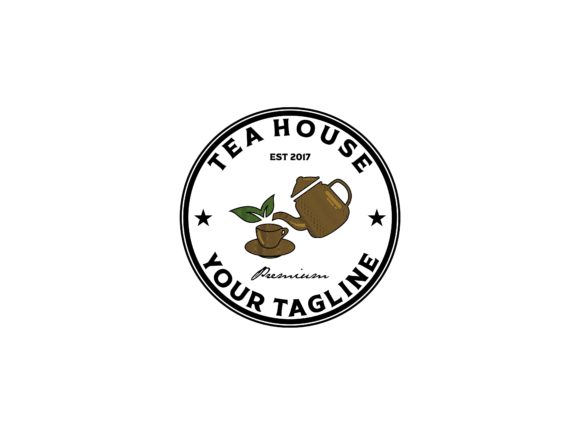
Opening the files, the design greets you with a quiet, retro confidence. It’s not shouting; it’s inviting. The classic circular badge format, with its layered text and central tea-themed symbol, feels instantly familiar—like something you’d find on a well-loved apron or a specialty shop’s tote bag. This isn’t a trendy, flashy graphic; it’s a design with a sense of history. That vintage personality is its greatest asset. It creates a mood of warmth, craftsmanship, and simple pleasures. For embroidery, that mood translates beautifully into products meant to feel personal, cherished, and a little bit special.
I immediately picture this on a custom embroidered tote bag for a small-batch tea seller, or as a subtle detail on a linen apron for a cozy café. It would shine as a decorative patch on a denim jacket for a hobbyist, or as the central motif on a cotton pillow cover for a reading nook. The “tea house” theme is specific, but the vintage badge style is versatile. This design naturally belongs to projects that celebrate handmade quality, niche interests, and gentle branding.
Performance in the Real World of Stitching and Selling
Let’s talk embroidery. The provided vector formats—EPS, SVG, and PNG—are crucial. This means the design can be scaled cleanly to your needed hoop size without losing detail, a fundamental requirement for any quality embroidery file. The 300 DPI PNG with a transparent background is perfect for creating printable mockups for your Etsy listings or craft fair previews, helping customers visualize the finished product.
Imagine you’re preparing a batch of embroidered tea towels as holiday gifts. Using this design, the clear, separated elements—the outer ring, the text, the central icon—should translate well into distinct stitch areas. Satin stitches for the bold outlines and fill stitches for the solid areas can create a satisfying, crisp look. On a sweatshirt or a baby’s organic cotton blanket, the badge’s defined shape would offer a clean, professional finish that elevates a simple garment. For small business merchandise, like caps for a local tea room, this vector acts as a ready-made branding asset, adding consistency and recognition to your products.
Where a Careful Eye is Needed
However, vintage charm often comes with detail, and detail requires attention in embroidery. The smaller text elements within the badge are my first note of caution. When scaled down for a smaller hoop size—say, for a baby item or a cap’s curved surface—those tiny letters could become a blur of stitches if the density isn’t managed well. Similarly, on textured fabrics like a knit sweater or a loosely woven towel, fine details can get lost.
I would avoid using this design on very thin or stretchy fabrics without robust stabilizer, as the denser fill areas might pull or distort the material. On dark fabric backgrounds, the design’s appeal relies on strong thread color contrast; a simple black-and-white test mockup before stitching is invaluable to judge readability. This isn’t a design for rushed, one-size-fits-all application. Its value is unlocked through careful project pairing.
How This Design Affects Your Product’s Story
Beyond the stitch, a design like Tea House Vintage Badge Vector impacts how your work is perceived. It carries a built-in narrative of tradition and care, which enhances the handmade presentation of your item. A customer receiving an embroidered pillow cover with this badge isn’t just getting decor; they’re getting a piece with a curated personality. That boosts giftability and buyer engagement.
For creative entrepreneurs, using a cohesive, well-executed design fosters customer trust. It signals professionalism. When your embroidery clarity matches the design’s intent, the final product feels intentional and valuable. Whether for personalized gifts or commercial embroidery projects, this vector can help your finished product tell a clearer, more attractive story.
Practical Notes from the Worktable
Before you hoope up your favorite fabric, here’s my practical checklist. First, always test the embroidery file on a scrap of your intended fabric. Check how the small details render and observe the stitch density. Confirm your hoop size accommodates the design comfortably—don’t force a detailed logo into a tiny space. Inspect the design in both light and dark background mockups to plan your thread palette.
Use a proper stabilizer for your fabric type to preserve those clean lines. Crucially, before selling any finished items or digital products derived from this asset, confirm the licensing terms. The product category is Logos and Graphics, but the specific license for commercial use isn’t detailed here—you must verify that. This step protects your craft business.
Ultimately, the Tea House Vintage Badge Vector is a design with character. It’s not a generic graphic; it’s a specialized asset with a strong vibe. Its real-world performance hinges on your thoughtful application: pairing it with the right project, fabric, and scale. When you do that, it can become a beautiful, stitch-perfect emblem of quality for your embroidery project, your small shop product, or that perfect personalized gift.