Camper Happy: A Graphics Asset for Crafts and Cozy Brands
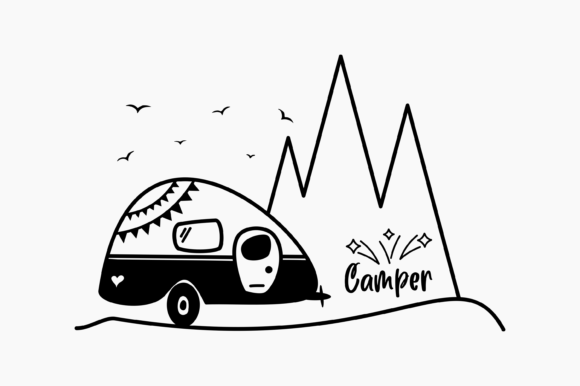
When I first opened the Camper Happy file, my immediate thought was, "This is for the client who wants warmth, not just a graphic." It’s not a sterile corporate icon. It’s an illustration with a personality—a friendly, slightly nostalgic vibe that feels handmade and approachable. The style leans into a contemporary crafts aesthetic, with clean lines softened by a cheerful, almost whimsical composition. It instantly frames a mood: optimistic, relaxed, and community-oriented.
The First Client Fit: Who Would This Asset Serve?
This graphic design asset naturally slots into projects for small businesses that trade on authenticity. Imagine a boutique selling handmade soaps, a family-run campground updating its branding, a seasonal cafe promoting its autumn menu, or an Etsy shop specializing in cozy home decor. For these clients, Camper Happy isn't just clipart; it's a ready-made visual tone. It could anchor a brand identity for a local, artisan-focused business or serve as the key decorative element for a limited-run product line, like a special batch of honey or hand-knit goods.
How It Elevates Real-World Marketing Visuals
In practical application, this asset performs beautifully as a focal point. On product packaging for a handmade brand, it provides an instant, recognizable badge of charm. For a social media graphics campaign promoting a "backyard gathering" event, it becomes the hero image on Instagram posts and Pinterest pins, setting the entire visual theme. As a sticker design or t-shirt design for a small business’s merchandise, it translates directly into tangible brand affinity. Its scalability from SVG files means it's equally effective on a large poster for a market stall or a tiny detail on a mug’s handle in a product mockup.
Navigating Layouts: Where This Design Shines and Where It Requires Care
For large layout areas—hero graphics on a website, full-page editorial design in a brochure, or the main art on a tote bag—Camper Happy fills space with intention. It supports a themed collection, allowing you to build a whole campaign around its aesthetic. As a decorative accent on packaging design or within a Canva template for blog visuals, it adds polish without overwhelming the content.
However, a designer must use it carefully in small sizes or crowded layouts. Its detailed, illustrative nature can lose definition when shrunk for a favicon or crammed next to dense text blocks. On complex backgrounds, especially low-contrast designs, its readability can suffer. This asset is a mismatch for minimalist, stark corporate branding. It’s for projects where emotional appeal is part of the visual hierarchy.
A Note on Professionalism and Audience Engagement
Using Camper Happy correctly enhances visual trust. It signals a brand that values craft and joy. For audience engagement, especially in creative marketplaces like Etsy or for print-on-demand sellers, it hits an immediate note of recognition—people understand the mood it conveys. This directly boosts the perceived professionalism of a project when that project’s goal is to feel personal and crafted. It makes a digital ad for a handmade business look cohesive and deliberate.
The Designer's Practical Checklist Before Client Use
Before committing this asset to a real client project, I run through a few critical tests. First, I test it in black and white to ensure the form holds up without color, crucial for some print processes. I check contrast by placing it on both light and dark backgrounds to confirm it remains legible. Previewing it at both tiny and massive sizes reveals any potential loss of detail or awkward scaling.
I always place it on real mockups—a t-shirt, a mug, a website header—to see how it interacts with other elements. For print quality, verifying the resolution and formats is key; the included PNG with transparency and the editable SVG or vector files are huge advantages for adaptation. I compare it with different font styles: a friendly sans serif aligns perfectly, a rustic script can enhance it, but a severe serif might clash. Finally, the most important step: confirming the commercial license. The description notes unlimited use for items like stickers, t-shirts, and mugs, which is essential for commercial design work. I ensure the terms explicitly cover my client’s intended use, whether for marketing visuals, product labels, or digital ads.
Beyond the File: The Asset as a Creative Catalyst
Ultimately, Camper Happy is more than a digital product for crafts. It’s a creative design shortcut that establishes a complete visual mood. For a designer juggling multiple client projects, it provides a ready-made solution for a specific niche—the cozy, craft-oriented, community-driven brand. It improves the final result by offering a polished, cohesive illustration that many small business owners couldn’t articulate or commission on their own. In the right project, it doesn’t just fill space; it tells a story of happiness, simplicity, and handmade care, making the entire design direction feel more resolved and authentic.